
I am currently taking a readings class on Material Culture, which interprets the past through objects, as opposed to strictly documents. In addition to various readings, we also are expected to prepare three source reports and a paper. The first source report was exploring our midden (trash dump) at least 100 years later to see how someone would interpret our lives by the objects left behind. The second report focused on us exploring an object and the third will deal with a building. For the second report, I chose to explore an 1861 Springfield rifled musket. There were several in a collection of Civil War artifacts at the Myra Museum, home of the county historical society. With that brief introduction, I hope you enjoy this short report.
This piece is part of a nice collection of Civil War era military weapons and equipment at the Myra Museum, home of the Grand Forks County Historical Society. According to a conversation with Leah Byzewski, this collection was originally owned by the Grand Forks chapter of the Grand Army of the Republic (GAR). It consisted of nine rifled muskets (Model 1861 Springfield), eight black leather belts with brass buckles containing initials “US” on them, five leather cartridge boxes, with brass “US” plate on the flap, two non-commissioned officers’ swords with one scabbard, two sabers (one possibly cavalry) and two scabbards, four percussion cap boxes, six bayonets and scabbards, and one McClellan saddle. This collection is part of a larger military collection in the museum containing uniforms and articles of military life from the Civil War to the Korean War. The Civil War collection is quite impressive for this area given the distance from the major theaters of the war.
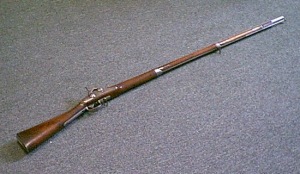
Figure 1: Picture of 1861 Springfield rifled musket examined at the Myra Museum.
The weapon studied is identical to the other eight rifled muskets in the collection. It is between four and a half and five feet long, and weighs approximately ten pounds. It is not a heavy weapon, but is particularly awkward to hold given its length. The length of the weapon appears to make it a cumbersome piece of equipment for a soldier of the period, especially since the average soldier was only five feet, eight inches tall.
The weapon itself has a rather simple mechanism for operation. The firing mechanism consisted of a metal hammer and nipple, upon which a percussion cap was placed. The cap allowed the weapon to fire by igniting the gunpowder in the barrel. The weapon was a muzzle-loading rifle, meaning that it loaded from the end of the barrel, or muzzle. Since the bullet was loaded in this fashion, the rifle contained a ramrod, which is located in a slot underneath the barrel of the rifle. The ramrod is a slender rod with a metal bell-shaped end that slides down the barrel. Though not removed from the slot under the barrel for equipment preservation, the ramrod is slightly longer than the barrel.
The stock of the rifle was made of wood and stained in a dark brown stain. The stock was pitted with many nicks and scratches, which likely resulted from service during the war. In addition, the inscription of the initials “CS” was present near the trigger guard on the left side of the rifle. These initials may either be the initials of the soldier who used it, a postwar owner, or CS for Confederate States, which would be an intriguing twist if the weapon was captured by Confederate sources for a time during the war. There were three sites on the weapon, which flipped up and had numerical markings of 1, 3, and 5 on them.


Figure 2: Two of the three sites on this weapon flipped up to assist in viewing.
There were other markings present on the rifle, located on the lock and the breech of the barrel. The markings on the top of the breech included 1861 (likely the year of manufacture), “H & P”, which is likely representing the division of the Springfield armory, as indicated by other examples from the Springfield armory website.1 Other markings are found on the right side of the weapon underneath the lock and may indicate the distributor of the weapon and city that distributor was located, which are M. T. Wickham and “Phil.”, which likely refers to Philadelphia, Pennsylvania.

 Figure 3: The various markings found on the metallic portions of the weapon.
This weapon was, according to Hardee’s Rifle and Light Infantry Tactics, was loaded and fired through nine motions. The motions are: load, handle cartridge, tear cartridge, charge cartridge, draw rammer, ram cartridge, return rammer, and shoulder arms, which includes ready, aim, and firing.2 It seems a complex series of commands, but, with training, the soldier would be able to fire three rounds per minute.
This weapon fired a .58 caliber round, which was called the Minié ball, and was accurate to around five hundred yards, which was a significant improvement over previous technology.3 The Minié ball was a conical-shaped round with three grooves in the base of the round, which allowed the round to grip the rifling in the barrel. When the weapon was fired, the gases from the burning powder forced the hollow back of the round to expand and further grip the rifling, giving the rifle increased accuracy. The round is quite heavy for its small size and, with the velocity provided by the rifle combined with its mass, was capable of producing horrendous wounds, which could be fatal in many cases. Since the bullet and powder were separate, the rifle had an increased likelihood of jamming and appeared to need constant cleaning, however no evidence of this, in terms of cleaning materials, existed in the collection.
Given the tactics used in the war, coupled with the improved technology evident in the rifle studied, the incredibly high casualty rates of the Civil War are logical. With soldiers firing in massed ranks at close ranges, more men suffered wounds or death, as they relied on tactics designed for weapons with less accuracy than the 1861 Springfield rifled musket. Studying the rifle in the collection at the Myra Museum allows a greater comprehension of Civil War soldiers and their lives in combat. Holding such a piece raises questions about what events the rifle participated in, who the soldier (or soldiers) was that carried it and what that soldier (or soldiers) experienced. Thank you to the Myra Museum for allowing the inspection of part of their collection.
1Springfield Armory National Historic Site-Collections website found at: http://www.museum.nps.gov/spar/vfpcgi.exe?IDCFile=/spar/DETAILS.IDC,SPECIFIC=8774,DATABASE=objects,ORDERBY=CATNBR,LISTIDC=/SPAR/BROWSER.IDC,RECORDMAX=10,RECNO=129,WORDS=valejo. Accessed 02 March 2009.
2Hardee’s Rifle and Light Infantry Tactics. Reproduction copy (Decatur, MI: Invictus, 1997), 32-38.
3Paddy Griffith, Battle Tactics of the Civil War (New Haven, CT: Yale University Press, 1989), 26, 73-74.
 Civil War History
I just discovered this book yesterday, and as such have not read it and can not make an educated recommendation, but Earl J. Hess, the author of “The Union Soldier in Battle” has written a new book called “The Rifle Musket in Civil War Combat: Reality and Myth.” I’ll be reading it soon, and it would appear to dovetail well with your weapons research.
Hess’ new book on the rifle musket is indeed an excellent book. I highly recommend it.
I wanted to share an email regarding this post that was quite helpful and pointed out a possible error on my part.
My great grandfather mustered out of the 35th MA in 1865 and was allowed to keep his equipment, but he bought his Model 1861 Springfield musket from the US government for $6.00. Has anyone heard of other soldiers purchasing their guns upon their discharge?
“June 13th.
Had a fine night’s rest on deck of the steamer. Into Providence at 8 a.m. We were treated to a fine collation, interspersed with music from Morris Brothers minstrels. Came upon General Burnside on the street and cheered him most lustily. At 10 a.m. left for Readville. On our arrival were paid off, received our discharge papers, and allowed to take our muskets on payment of six dollars and all other equipments gratis. By nearly noon all the military red tape was cut, a team was procured and we West Dedhamites, were en route for home early p.m. The welcome home joyful in every way, and the old scotch motto-”Do ye the next thynge”-in the form of life as a citizen the next thing in life’s programe open before me.”
A friend has an 1861 Springfield Musket, left by his father, I just disassembled and cleaned it, I was looking for a rear sight and found a bunch of reproductions. How can I tell if the rifle is authentic or a repro, the father has passed so now answers there.
Herb
Mr. Gingold,
There are numerous ways in which you can tell an original weapon from a reproduction. Looking at any markins stamped in the lock plate or the barrel are good starting points. If you have any good photos of the weapon that you could send I’d be glad to take a look. I’d particularly want to see close up photos of the types of markings I describe above, but any photos would be good. I’m not an expert, but I can usually tell a repro from an original. You can email any photos you have to napoleangunner@yahoo.com.
I have an 1831 Springfield Armory rifled musket (1816 type 3) with bayonet tang and bayonet. It is an H&P conversion to cap and ball and is marked with an “NJ”. I’m told by a Springfield Armory collector that the “NJ” indicates it was converted for and issued to the New Jersey militia. My Great Grand father was in the Pennsylvania Militia in the Civil War (from Dubois, Pa.) and he is where this musket came from. The ram rod has a slight indentation which was to keep from spreading the mini ball when it was loaded. This musket also has the two rear sight flip ups as in the pictures.
I also have a Model 1816 Type II late production; aka “National Armory Brown” aka Model 1821 or Model 1822 .69 Cal. Percussion. 41 ” round barrel,3 barrel bands. Iron ramrod. Lockplate marked: PHILA/1827 to rear of hammer,” U.S. / M.T. Wickham” ahead of hammer Barrel marked left side: ” N.J.” Steel buttplate marked ahead top screw: “U.S.” Bayonet lug atop barrel marked”12″ This a contract arm, made by Marine T. Wickham in Philadelphia, Pa. c. 1822-1837 Originally flintlock, converted to percussion. The original bayonet is attached. My Great-Great Grandfather carried this during the war. I have his enlistment papers for the Maine Cavalry 1864, and transfer to the 1 reg’t D.C. Cav.1865 He did pay for the horse and equipment $100.00 of his $240.00 enlistment pay
fred-i have a mt wickham 1822 with the h&p conversion as well,it’s numbered 11-they could have been rackmates!
Your report is good except i would have substituted “bullet” or “ball” for “round”. The “round” is a slang term that found more common usage after metalic cartriges were invented. Also, since the rifled musket made use of (what was then a specialized) conical shaped projectile, the word “round” could be confusing to anyone not all that familliar with gun jargon. I know that “ball” could be as well, but that was ( and technically still is) what rifle bullets were called by the millitary in 1861
Does anyone know anything about a rifle dated 1863 with the letters U A C O new your on it? It also has an eagle holding a shield on it with the letters V P on the left side. I think it might have been made by Orison Blunt. Thanks, Mary
Great website, very helpful contents. Many thanks.
I took my 1831 (1816 type III) Springfield to the Beinfeld antique weapons show in Las Vegas in January. I saw several 1820’s conversion and one 1823 which was still a flintlock. That one was offered for $2,500. The conversions were offered for $1,400 – $1,700 retail at the show and I was offered a top of $900 by a dealer however there was lots of interest in mine.
I was referred to a book called “Flintlock Muskets” Volume 2 by Peter A. Schmidt which is supposed to have information on the conversion contractors. The book is rather expensive and I will report on what I find when the book arrives.
Very interesting information here. My Great grate grandfather was John Morris Phillips. Of Hewes and Phillips. I still have several contracts between the State of NJ and H&P for the conversion of flintlocks. I still looking to find an old rifle .
Don’t forget to change your caliber from .58 to .69